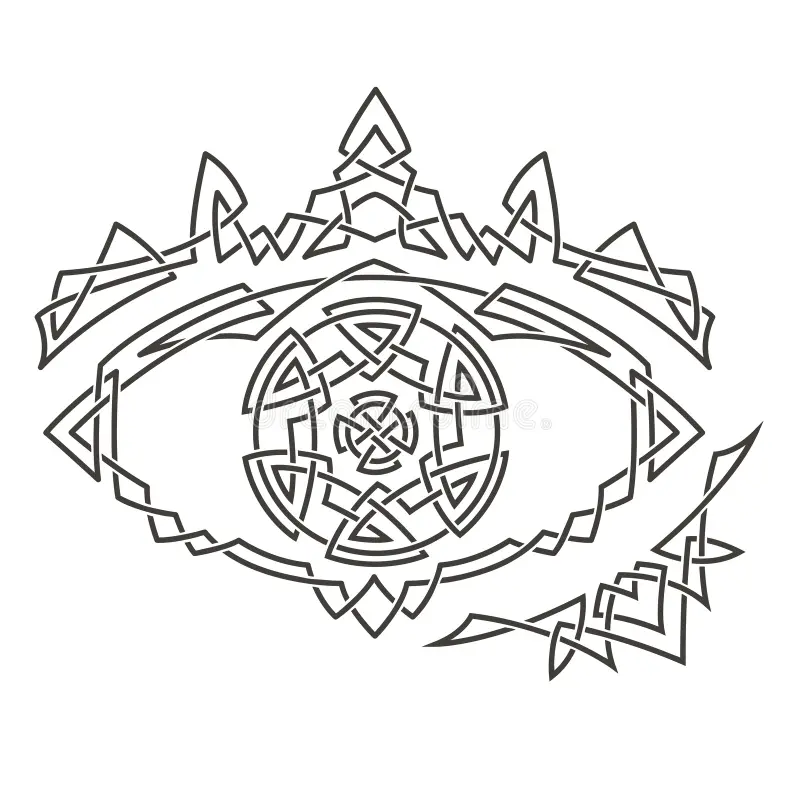
He did not want to be a god. He wanted to be left alone. The universe, as it so often does, ignored this preference entirely.
Attributed to an unnamed Taalist scholar
Taal is unlike any other deity in the Nor'Ovan pantheon. He was not created by El Anon. He was not born of divine lineage. He did not accumulate power through worship or cosmic struggle. He became a god by accident - a consequence of Zodo's power bleeding into a mortal soul in ways that Zodo himself did not intend and cannot fully explain. That this accident produced a being capable of trapping the Power of Zodo in a dream prison is either the greatest irony in the history of Nor'Ova or evidence that El Anon plans more carefully than he lets on.1
Born Taal Mercleis in the final years of the First Era, he is believed by many to have received his power before he ever drew breath. One account holds that when the Orb of Power cracked during the experiments of Emperor Killian Xerxes, much of what it held found its way into an unborn child left for dead.2 If so, Taal was never given Zodo's power. He was born with it.
Whether Taal is a god at all is debated more than any deity except Kymara. Many regard him as a saint - a mortal elevated to something beyond mortal by circumstances beyond his control, whose power is real but whose divinity is questionable. Others hold that what he did to Zodo places him unambiguously in the category of gods regardless of how he got there. Taal himself, according to the few accounts of his direct communication, has expressed no strong preference either way.3
Characteristics
Taal wept, cradling the dead black-winged angerian girl in his arms, "You, who treated me with such kindness, deserve better than this. Whatever power I possess, I pray that it can restore you." And thus, the Seraphim, Mara, was born.
Declarations of Mercy 12, Declarations of Devotion
Taal is gentle, introspective, and profoundly empathetic - the most emotionally accessible of the Nor'Ovan deities, which is fitting for a god of dreams and the subconscious. He does not judge. He does not demand compliance like Arameas or worship like Zodo.4 He listens, in the way that the dreaming mind listens - taking in everything without immediately making sense of it, sitting with what is felt before deciding what it means.5
He carries with him a persistent sadness that his followers do not try to explain away. He did not choose his power, did not choose his role, and did not choose to become the jailor of one of the most dangerous beings in the universe. He does what he does because it needed to be done and he was the one who could do it. His followers find something deeply honorable in this. Others find it simply sad.
Finding himself surrounded in a battlefield with many dead and many more wounded, Taal fell to his knees and wept and as he wept the sky wept, "Why is it that I must suffer an eternity of pain, of watching brother against brother, of feeling death after death? Is not the eternities of suffering Dico within the Subconscious not enough?" Upon hearing Taal, the soldiers laid down their arms.
Declarations of Penitence 10, Declarations of Devotion
Personification
Taal appears, in the accounts that exist, as a young man - younger than Arameas, not as ageless as Kymara, not as ancient as El Anon. He has the look of someone who has been awake too long and is very, very tired. He appears most commonly in dreams rather than waking visions, which is appropriate given his domain, and his appearances in the waking world are so rare that some scholars question whether they have ever occurred at all.6
And behold, I saw him, a man no older than his mid to late twenties, of average height, hair like the sun, and eyes like ice. He could have been any number of men, were it not for the strange feelings of peace and sorrow around him, and the burden that he seemed to carry.
Declarations of the Witness 4, Declarations of Devotion
His presence in a dream is described not as an appearance but as an awareness - a sense that someone is listening, that the dream is being witnessed rather than simply experienced. Those who have felt it describe it as simultaneously comforting and strange.
Powers
Taal's power is that of the dream and the subconscious. He can enter dreams, shape them, observe them, and in extreme cases use them as a prison - as he did with Yu Dico7. He can perceive the emotional truth of a person regardless of what they say or how they present themselves. He cannot compel action or change what someone believes, but he can make visible what a person is feeling beneath what they are showing - which is, in its way, a more intimate power than any weapon.8
The dream prison in which Yu Dico is currently held is perhaps the most significant exercise of divine power in recorded history. That it was accomplished by an accidental god who did not want the responsibility is not lost on anyone who studies it.9
Many scholars believe the prison did not close without cost. As Taal fell at the end of the Great Magic War, countless others fell with him into the Dark Paralysis, a sleep from which many have never woken. Those who have, the Awakened, speak of a dream-world in which Taal and Zodo were one, and some still call him Taal Zodo. Taalists insist this is only the confusion of the dreaming mind. Others are less certain.
Followers
Taal has fewer devoted followers than any other deity in the pantheon, for several reasons. His domain - dreams, the subconscious, emotion - does not lend itself to institutional religion the way law or creation does. He makes no promises. He offers no rewards for worship. He does not intervene in battles or grant military strength. What he offers is understanding, which is valuable but harder to organize a church around than salvation or power.10
The great exception is the Templars of Mercy. They are not a church, and do not claim to be one. They have no central authority, no hierarchy beyond the individual chapter, and no doctrine beyond their name. They are protectors who follow Taal's example rather than his worship: they step in where suffering is greatest, guard those who cannot guard themselves, and, like their god, act when action is necessary. Chapters can be found across Nor'Ova, often stationed where trouble is expected.
Those who do follow him tend to be healers of a particular kind - not the physically miraculous healing of Kymara's priests, but the slower, harder work of helping people understand themselves. Counselors, dream interpreters, those who tend the minds of the grieving, the traumatized, and the lost. His followers are rarely prominent. They are frequently indispensable.
Clerics of Taal
Priests of Taal can enter and observe the dreams of any sleeping person within range without being detected, unless they choose to make themselves known. They can perceive the emotional state of any person they are in conversation with, regardless of what that person presents outwardly - they cannot be deceived about how someone feels, though they can still be deceived about facts. They are immune to fear effects and to possession by dream-based entities, and they add their Religion trait to Insight checks involving emotional perception, dream interpretation, and the assessment of mental health.11
Theological Notes
Taal's position in Nor'Ovan theology is genuinely unique. He is the only deity whose existence is directly attributed to Zodo - not as a creation or a follower, but as an unintended consequence. His power came from Zodo. His divinity, such as it is, came from using that power against Zodo. He is simultaneously a product of the most dangerous force in the universe, and the jailor of a piece of it.
What this means for his alignment with El Anon and Kymara is unclear. He has not declared himself allied with them. He has not declared himself opposed to Zodo in any theological sense - he simply acted when action was necessary and has maintained the consequence of that action ever since. Some interpret this as a form of profound neutrality. Others interpret it as a form of exhaustion.12
The question of what happens when Taal's hold on his captive ultimately fails - as most theologians believe it eventually must - is one that the faithful of every major religion prefer not to examine too closely. The Apocalypse Papers of Arameas address it directly. Most people who read that section wish they had not.13
- 1. Ardathian theologians favor the latter interpretation. Zodoist scholars find it insulting, insisting that Taal was merely a chosen vessel and it was according to Zodo's will. Most independent scholars simply find it remarkable and leave it at that.
- 2. See Tale of Two Worlds, and Yu Dico. The account is unverified.
- 3. "Whatever I am, I am tired" is the closest thing to a theological statement attributed to him directly. His followers find this deeply relatable.
- 4. Some accounts state that he wishes none would worship him, and would instead treat one another more kindly.
- 5. This quality makes priests of Taal exceptionally good at what might be called pastoral care. It also makes them occasionally frustrating to talk to, as they tend to reflect questions back rather than answer them.
- 6. Two documented waking appearances exist in the historical record, both contested. In each case, the account was written by a single witness, and in each case that witness subsequently became a priest of Taal, which his followers cite as evidence of authenticity and his critics cite as evidence of bias.
- 7. Power of Zodo
- 8. The ability to perceive emotional truth without being able to act on it directly is, Taalist scholars note, both Taal's greatest gift and his greatest burden. He sees everything people feel. He cannot make them feel anything differently. He can only witness.
- 9. The Soul of Zodo, it should be noted, is not held in Taal's dream prison - that aspect was sealed in Xodod by El Anon, with the aid of Zodo's own son Xeno. What Taal holds is a different matter, and theologians debate which aspect of Zodo it is and what the implications of its eventual release would be. These are not comfortable debates.
- 10. There have been several attempts to establish a formal Church of Taal. They have all, without exception, dissolved within a generation - not through persecution or conflict but through internal disagreement about what exactly it means to follow a god who principally advocates listening and sitting with difficult feelings.
- 11. The immunity to fear is considered by some to be the most practically useful of Taal's clerical gifts in a world where fear-based magic is common. Priests of Taal tend to be very calm in situations that would unsettle anyone else, which other people find either reassuring or unnerving depending on the situation.
- 12. The two interpretations are not mutually exclusive.
- 13. The relevant passage from the Apocalypse Papers is Paper 7: "The dreamer shall wake, and the waking shall dream, and in the confusion between the two shall the ending begin, for the law which was set now is broken." Aramean scholars consider this clear. Other scholars consider Aramean scholars to have an unusual definition of clear.