
Weapon Crafting at The Blacksmith is where you can create your own weapons. This can seem daunting at first, but understanding how to do this will allow you to make any kind of weapon you want.
How To Use The Blacksmith
Before you can start to use the blacksmith, you will want to understand how to do so. The more you understand, the easier the process will be and the better of a weapon you will be able to have made.
Reading This Page
The first thing to learn is how to read the information on this page. This page is divided into Blades and Handles.
- Blades: Blades are the business end of your weapon, the main part of your weapon, if you will. Despite being called a blade component, it doesn't need to be sharp or made of metal. It just needs to only be used to do damage. All blade components must be attached to a handle component. Blades also have Blade Enhancements and Blade Materials. Blade Enhancements are enhancements to your blade, and blade materials are the materials used to make your blade.
- Handles: Handles are components used to hold your weapon. Blades are attached to handles, but handles do not require a blade. A staff, for example, is simply a long handle component, typically without a blade. But don't let that little fact stop you from adding a unique small blade to it. Handles also have handle enhancements and handle materials.
Each component is listed on a table with the following fields: Item, Crafting Level, Attack, Parry, Reach, Affected Area, Evade Modifier, Weight, Space Taken, Other Information, Build Time, and Cost. Most of these should already be understood, but below are a few that might be new to you.
Crafting Level: this is crafting skill that you will need to craft this weapon. Each component will be listed as Basic, Novice, Better, and Advanced. The highest level of component determines the crafting skill you will need, ie, Basic Crafting, Novice Crafting, Better Crafting, and Advanced Crafting. If the component says it increases the crafting level that means it will increase the crafting level to the next level, ie, Basic to Novice, Novice to Better, and Better to Advanced. There is no level above Advanced.
Build Time: this is the time it takes to make that component. It is listed in hours.
The Basics of Making A Weapon
To make a weapon you will be adding together all of the items of your blade, all of the items of your handle, and then adding those two completed components together. Simple, right? No? Then let me explain further.
First Step: Making a Blade Component
The first step to making a weapon is likely going to be making a blade component - unless you want a staff or rod. Anyways, you simply need to add the values of the material to the blade, and any enhancements. For the most part, it is simple addition, but some components have multipliers instead of flat values. No worries, it isn't that difficult. Lets go over it one "item" at a time.
First you need to decide which items you want to make use. Until you get a handle on how to do things, you should start simple. Lets start with making a simple Steel Long Broad Sword. For the blade we will need the following: Attack Type, Blade Length, Blade Placement - End, and Sword Shape Blade. We will also be using the Broad Blade Enhancement and the Steel Material.
Attack Type: This is important, as you need to assign an attack type to your weapon. Every weapon you make must have an attack type. Even staffs. Since we are making a sword, we will get the slashing attack type. The only information we need is the slashing information in Other Information, and the cost of 1.00.
Blade Length: This is the length of your blade. It is sold in components of 3 inches. A typical long sword is 33 inches, so we will need 3 of these. Lets record the information together. We will only record what we need to know.
| Item | Crafting Level | Parry | Reach | Area | Weight | Space Taken | Build Time | Cost |
|---|---|---|---|---|---|---|---|---|
| Blade Length 3 Inches | Basic | N/A | 0 | 0 | base weight 0.2 | 0.25 | 0.25 hours | 0.50 |
| 33 inches (10 components) | Basic | N/A | 0 | 0 | (0.2 x 10) = 2 | (0.25 x 10) = 2.5 | (0.25 x 10) = 2.50 hours | (.50 x 10) = 5.00 |
The above is an example, it may not be accurate. Hopefully you understand what is shown above. Since we wanted 33 inches, we had to buy the blade length 10 times. The first row shows what the initial values were, the second row shows the total values of all 10 put together. Notice that Blade Length does not affect Reach or Area.
Blade Placement: Next we get to place where the blade will go on our handle. A blade must always be on a handle unless it is something like a throwing star. Anyway, we want a sword so we will get the Blade Placement - End that increases the range by + 0.25 and costs 1.50.
Sword Shape Blade: This one is probably self explanatory, but we need to tell the blacksmith we want the blade shaped like a sword blade. This gives us the following
| Item | Crafting Level | Attack | Parry | Reach | Area | Evade Modifier | Weight | Space Taken | Build Time | Cost |
|---|---|---|---|---|---|---|---|---|---|---|
| Sword Shape Blade | Basic | + 1 | +1 | 0 | 1 target | N/A | N/A | 0 | 1 hour | 5.00 |
Steel Material: This is the material we will make our blade from.
| Item | Crafting Level | Attack | Parry | Range | Evade Modifier | Weight | Space Taken | Build Time | Cost |
|---|---|---|---|---|---|---|---|---|---|
| Steel | Novice | +1d8 | +1d6 | N/A | N/A | metal x 1 | 0 | 1 hour | 6.00 per pound |
Broad Blade Enhancement: This will increase the width of our blade which will give us a heavier sword. Add Enhancements Last
| Item | Crafting Level | Attack | Parry | Range | Evade Modifier | Weight | Space Taken | Build Time | Cost |
|---|---|---|---|---|---|---|---|---|---|
| Broad Blade Enhancement | Novice | + 1 | +1 | N/A | +1 | x1.5 | 0 | 1 hour | 8.00 |
Ok, lets put it all together to get our sword blade…
| Item | Crafting Level | Attack | Parry | Reach | Area | Evade Modifier | Weight | Space Taken | Build Time | Cost |
|---|---|---|---|---|---|---|---|---|---|---|
| Blade Length 33 Inches | Basic | 0 | 0 | 0 | 0 | 0 | 2 | 2.5 | 2.5 hours | 5.00 |
| Attack Type - Slashing | Basic | 0 | 0 | 0 | 0 | 0 | 0 | 0 | 0 | 1.00 |
| Blade Placement - End | Basic | 0 | 0 | 0 | 0 | 0 | 0 | 0 | 0 | 1.50 |
| Sword Shape Blade | Basic | +1 | +1 | 0 | 1 target | 0 | 0 | 0 | 1 hour | 5.00 |
| Steel Material | Novice | +1d8 | +1d6 | 0 | 0 | metal x 1 (2) | 0 | 1 hour | 6.00 per pound (12.00) | |
| Broad Blade Enhancement | Novice | +1 | +1 | 0 | +1 | x 1.5 (total) | 0 | 1 hour | 8.00 | |
| Completed Blade | Novice | 1d8 +2 | 1d6 + 2 | 0 | 1 target | +1 | (2 * 1.5) = 3 | 2.5 | (2.5+1+1+1) = 5.5 hours | (5+1+1.5+5+12+8) = 32.50 |
I've included how to add together the values in the Completed Blade so you can hopefully see how we have come up with our completed blade values. Multiplying happens after addition. Hopefully this makes sense.
Second Step: Make The Handle
Now lets make the handle that this blade will attach to. We will need the following: Handle 6 inches, Handle Straight, Twisted Handle Enhancement, Elgin Material, and Black Maple Material. We will not need attack type since we are using a blade with this handle.
Handle Length 6 Inches: We only need a 6 inch handle since this is a sword, so this will be simple.
Handle Shape Straight: We want a straight handle for the sword.
Two-Handed Grip Enhancement: This enhancement lets us basically make the long sword a 2-handed sword, giving it an increase in attack and parry for being wielded with 2 hands.
We will finally add in the values of both wood materials since we are using a twisted handle. Ready? Lets do this!
| Item | Crafting Level | Attack | Parry | Reach | Area | Evade Modifier | Weight | Space Taken | Other Info | Build Time | Cost |
|---|---|---|---|---|---|---|---|---|---|---|---|
| Handle Length 3 inches (x2) | Basic | 0 | 0 | 0 | 0 | 0 | (0.2 x 2) = 0.4 | 0.5 | N/A | 0.5 hours | 1.00 |
| Handle Shape Straight | Basic | 0 | 0 | 0 | 0 | 0 | 0 | 0 | N/A | 0.5 hours | 1.00 |
| Oak Material | Basic | 0 | 0 | 0 | 0 | 0 | (0.5 x 0.4) = 0.2 | 0 | flammable | 0.5 hours | (4 x 0.2) = 0.80 |
| Two-Handed Grip Enhancement | Novice | +1d6 | +1d6 | 0 | 0 | 0 | (0.2 x 1.3) = 0.26 | 0 | Attack and Parry carry to blade | 0.5 hours | 5.00 |
| Completed Handle | Novice | +1d6 | +1d6 | 0 | 0 | 0 | 0.26 | 0.5 |
flammable |
2 hours | (1.00+5.00+0.80+5.00) = 7.80 |
Notice that 0's are in Attack and Parry, even though those components might have an Attack and Parry value? That is because handles do not add their attack or parry values to the completed sword. Those are only used when making handle-based weapons such as rods and staffs. The exception here is the Two-Handed Grip Enhancement which states that those two values do carry to the completed blade.
Third and Final Step: Combine Blade with Handle
Now we can combine the completed blade with the completed handle to get the completed weapon. Here's some rules to consider:
- Handles do not increase sword attack value. The handle attack value is for making staffs, rods, or similar weapons. The exception again is the Two-Handed Grip Enhancement.
- Handles do not increase sword parry vale. The handle parry value is for making staffs, rods, or similar weapons. The exception again is the Two-Handed Grip Enhancement.
| Item | Crafting Level | Attack | Parry | Reach | Area | Evade Modifier | Weight | Space Taken | Other Info | Build Time | Cost |
|---|---|---|---|---|---|---|---|---|---|---|---|
| Completed Blade | Novice | 1d8 +2 | 1d6 + 2 | 0 | 1 target | +1 | 3 | 2.5 | N/A | 5.5 hours | 32.50 |
| Completed Handle | Better | 1d6 | 1d6 | 0 | 0 | 0 | 0.26 | 0 |
flammable |
2 hours | 7.80 |
| Completed Broad Steel Long Sword | Novice | 1d8+1d6+2 | 2d6+2 |
0 |
1 target |
+1 | 3.26 | 2.5 | N/A | 7.5 hours | (32.50 + 7.80)=40.30 x 1.25 fee = 50.38 |
It may look confusing at first but once you do it a couple times, it is really not so difficult. Simply remember the following:
- Always add before you multiply: If something you are adding to your component has a multiplier, you will multiply that against everything you added to that component. For example, with the sword blade component above we added together the blade shape and steel material attack values and took that total to multiply against the broad blade enhancement attack value. That is because the enhancement would enhance the total attack value of that blade.
- Enhancements are added last: They effect are are based on the entire blade/handle.
- Round Up Weights to Nearest Hundredth: Weights should never have more than 2 decimal places. If you have a weight like 12.021, make it 12.03.
- You need a handle with a blade (in most cases), but you do not need a blade with a handle. Remember, handles will not increase attack value or parry value of blades.
- You must increase the total cost by 25% if you do not craft the weapon yourself (x1.25) to pay the blacksmith for labor and taxes. Certain settings may add an additional fee.
- The weapons you create through the Blacksmith will always be better than the weapons you can buy that were already made.
Hopefully you understand somewhat how this all works. If you have any trouble, please ask for help.
Blade Components
These are your blade components. You do not have to use these if you are making a weapon that does not use a blade.
| Component | Crafting Level | Attack | Parry | Reach or Range | Affected Area | Evade Modifier | Weight | Space Taken | Other Information | Build Time | Cost |
|---|---|---|---|---|---|---|---|---|---|---|---|
| Attack Type | Basic Crafting | 0 | 0 | 0 | 0 | 0 | 0 | 0 |
Defines the weapon's primary attack type.
|
0 (zero) | 1.00 |
| Blade Length 3 inches | Basic Crafting | 0 | 0 | 0 | 0 | 0 | base weight of 0.2 pounds metal | 0.25 |
|
0.25 hours | 0.50 |
| Blade Placement - End | Basic Crafting | 0 | 0 | 0 | 0 | 0 | 0 | blade length + handle lenght |
Places blade on end of handle, like with swords, spears, axes, etc... |
0 (zero) | 1.50 |
| Blade Placement - Side | Novice Crafting | 0 | 0 | 0 | 0 | 0 | 0 | 0 |
|
0 (zero) | 1.50 |
| Chain Whip "Blade" | Better Crafting | 1 of material attack value dice ⬆️ | 0 | +3 | 1 target of chosen space or 1 line of spaces up to whip's reach. | -1 | 0 | 2 |
Use to make chain whip. |
5 hours | 5.00 |
| Cloth Whip "Blade" | Basic Crafting | 2 of material attack dice | 0 | +2 | 1 target of chosen space or 1 line of spaces up to whip's reach. | 0 | 0 | 2 |
Use to make a cloth whip. |
3 hours | 5.00 |
| Fork Shape | Novice Crafting | 3 of material attack value dice | 2 of material parry value dice | +1 | 1 space | 0 | x 1.3 | 0 |
|
1.5 hours | 5.00 |
| Large Headed Shape | Basic Crafting | +2 | 0 | 0 | 1 space* | +1 | x 1.75 | 0 |
|
1.5 hours | 5.00 |
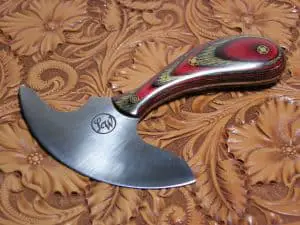
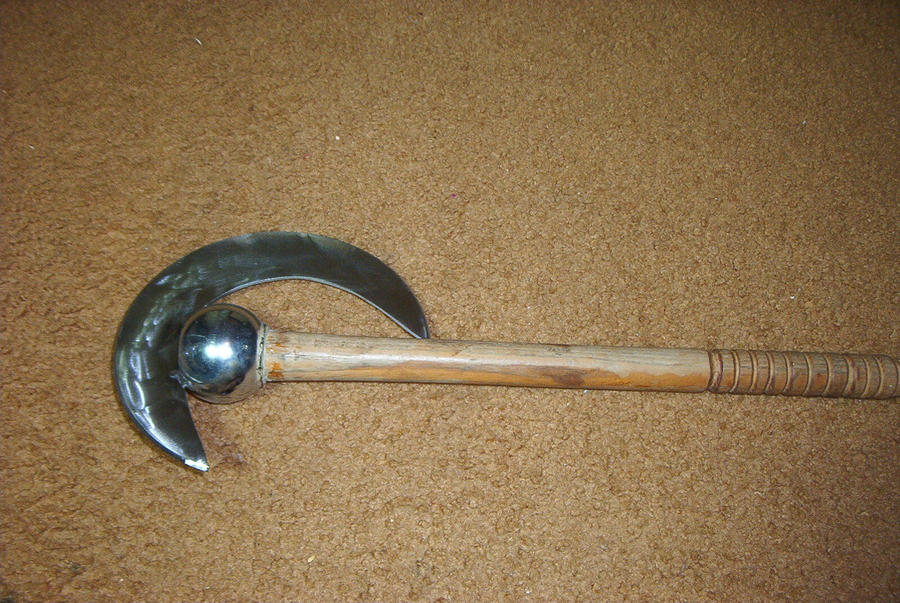
| Quarter Moon Shaped Blade | Novice Crafting | +2 | 0 | 0 | depending upon blade size | 0 | x 1.2 | 0 |
|
1.5 hours | 5.00 |
| Spade Shape | Novice Runic Crafting | +1 | 0 | +1 | 1 space | 0 | x 1.35 | 0 |
|
1 hour | 5.00 |
| Star Shaped Blade | Novice Crafting | 0 | 0 | throw range: +1d6 if no handle is attached; reach: 0 | depending upon blade size | 0 | 0 | 0 |
|
2 hours | 0.50 |
| Sword Shape Blade | Basic Crafting | +1 | +1 | 0 | 1 target | 0 | 0 | 0 |
Basic sword blade |
1 hour | 5.00 |
| Thin Shape | Novice Runic Crafting | -2 | +2 | 0 | 1 target | -1 | x 0.9 | 0 |
Makes the blade thin, like a rapier. |
0.5 hours | 5.00 |
| Wedge (Axe) Shape | Basic Crafting | +1d4 | 0 | 0 | depending upon blade size | +1 | x 1.5 | 0 |
|
1 hour | 5.00 |
| Wedge Sword Shape | Basic Crafting | +1d4 | +1 | 0 | 1 space | +1 | x 1.5 | 0 |
For thicker wedge shaped swords such as falchions. |
1 hour | 5.00 |
| Curved Blade Shape | Novice Crafting | -1 | +1d6 | 0 | 1 target | 0 | x 0.9 | 0 |
|
1 hour | 6.00 |
| Small Blade Size | Basic Crafting | +1d3 | 0 | 0 | 0 | 0 | x 1.1 | 0 |
Pair with Blade Shape Component to give attack value based on increased size, width, and weight of blade. A "Small" blade size is the smallest size component, however, is a step larger than the typical size of that blade. |
0.5 hours | 4.00 |
| Medium Blade Size | Novice Crafting | +1d6 | 0 | 0 | 0 | 1 | x 1.25 | +1 |
Pair with Blade Shape Component to give attack value based on increased size, width, and weight of blade. |
1 hour | 8.00 |
| Large Blade Size | Better Crafting | +1d8 | 0 | 0 | 0 | 2 | x 1.5 | +2 |
Pair with Blade Shape Component to give attack value based on increased size, width, and weight of blade. |
1 hour | 10.00 |
| Giant Blade Size | Advanced Crafting | +1d10 | 0 | 0 | 0 | 3 | x 1.75 | +3 |
|
1 hour | 14.00 |
| Pointed Shape | Basic Crafting | +1 | 0 | +1 | 1 target | 0 | x 0.2 | 0 |
|
0.25 hours | 1.00 |
| Joined Rings | Basic Crafting | 2 die ⬇️ | 0 | 0 | 1 target | 0 | x 0.65 | 1 |
Rings joined together in knuckle fashion that you wear. Used to create Ringed Knuckles. Does not require a handle component. |
0.3 hours | 2.50 |
| Tiny Blade Size | Basic Crafting | depends on blade lenght components | depends on blade length components | 0 | 0 | -2 | x 0.5 | 0 |
|
0.25 hours | 1.00 |
| Needle Point Shape | Novice Crafting | flat 3, no increase from material | 0 | Reach: 0, Range: Throw Range | 1 target of chosen space | -1 | x 0.1 | 0 |
|
0.25 hours | 0.15 |
| Baton Mode | Basic Crafting | 0 | 0 | 0 | 1 target | 0 | 0 | 0 |
Allows making a baton type weapon from handle components. |
0.25 hours | 0.50 |
| Rod Mode | Basic Crafting | 0 | 0 | +1 | 1 target | 0 | 0 | 0 |
Allows making a rod type weapon from handle components. |
0.25 hours | 0.50 |
| Staff Mode | Basic Crafting | 0 | 0 | 0 | 1 space | 0 | 0 | 0 |
Allows making a staff type weapon from handle components. |
0.25 hours | 0.50 |

Blade Enhancements
These are enhancements for your blade components.
| Component | Crafting Level | Attack | Parry | Reach or Range | Affected Area | Evade Modifier | Weight | Space Taken | Other Information | Build Time | Cost |
|---|---|---|---|---|---|---|---|---|---|---|---|
| Hook Shaped Blade | Novice Crafting | +1 | 0 | 0 | 0 | 0 | x 1.02 | 0 |
|
1.35 hours | 5.00 |
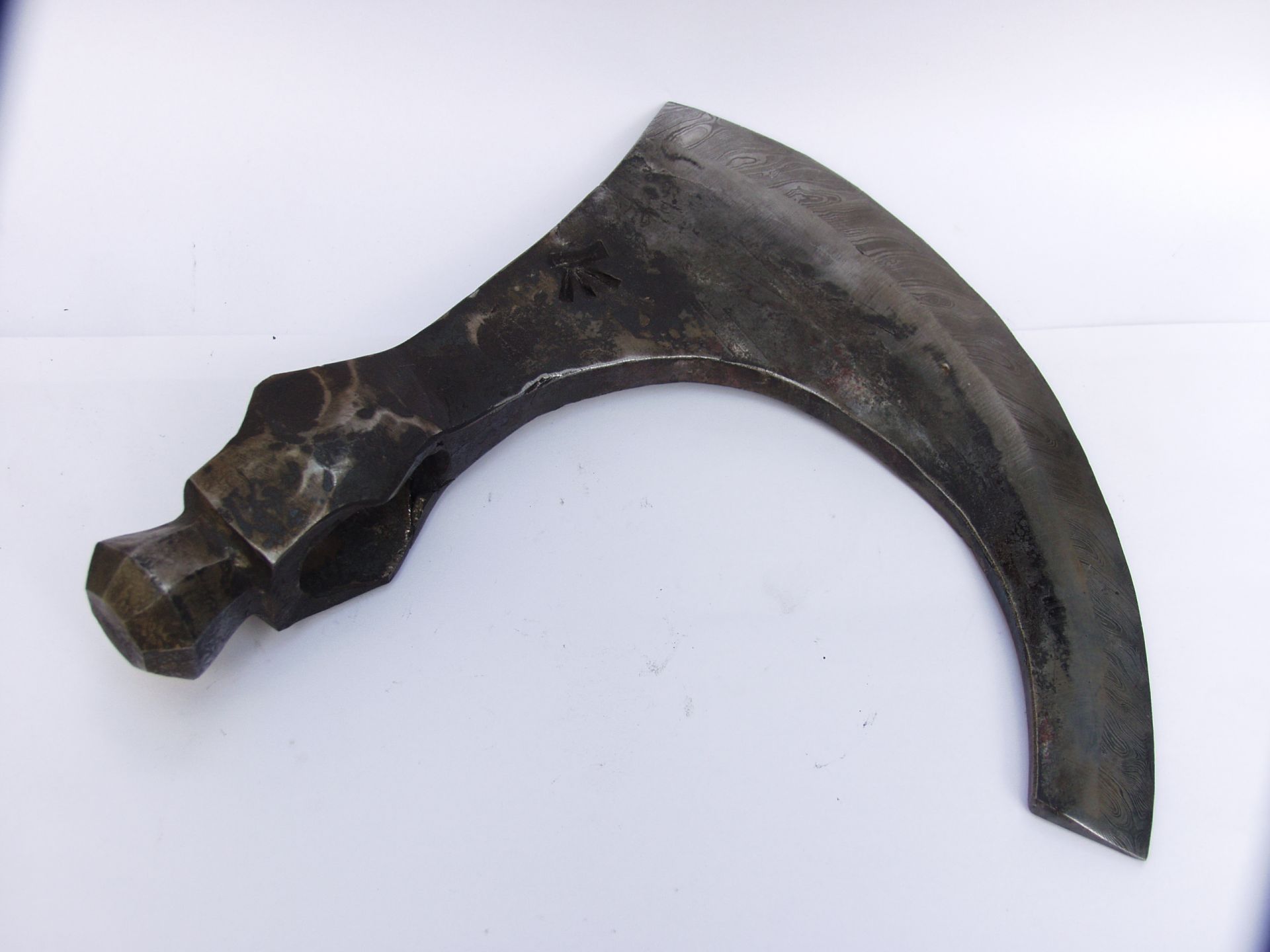
| Bearded Blade Enhancement | Novice Crafting | +1 | 0 | 0 | 0 | 0 | x 1.15 | 0 |
Adds a chin or beard if you will to the blade end of wedge shaped blades or half moon shaped blades.
|
1 hour | 6.00 |
| Broad Blade Enhancement | Novice Crafting | +1 | +1 | 0 | 0 | +1 | x 1.5 | 0 |
Increases the width and thickness of the blade, making it a more durable blade that could come down harder with more power behind its hit, however it is slower to swing. This cannot be used with Razor Thin Edge. |
1 hour | 8.00 |
| Deep Claw | Novice Crafting | +1d3 | 0 | 0 | 0 | 0 | 0 | 0 |
N/A |
0.5 hours | 15.00 |
| Double Bill Blade | Better Crafting | +2 | 0 | 0 | 0 | 0 | x 1.1 | 0 |
Instant Bleeding Out status effect |
1 hour | 10.00 |
| Razor Thin Blade Enhancement | Better Crafting | +2 | -3 | 0 | 0 | -1 | x 0.75 | 0 |
Thins out blade giving it a razor sharp edge. This causes it to cut more easily dealing more damage, however the blade becomes less durable. |
1 hour | 5.00 |
| Serrated Blade Enhancement | Novice Crafting | +1 | 0 | 0 | 0 | 0 | 0 | 0 |
Adds a serrated edge to the blade that doesn't cut as cleanly, however it does cut more easily through armor, giving the blade a 5% damage bypassing cloth and chain armor. |
0.5 hours | 5.00 |
| Tempered Metal | Better Crafting | +1 | +1 | 0 | 0 | 0 | 0 | 0 |
For metal materials only. |
x 1.25 | x 1.5 |
| Thrusting Claw | Novice Crafting | +1 | 0 | 0 | 0 | 0 | 0 | 0 |
This modification allows for 5% of the total damage to bypass armor and affect Vitality. |
0.5 hours | 20.00 |
| Balanced for Throwing | Novice Crafting | 0 | 0 | throw range + 1d4, no affect on reach | 0 | 0 | 0 | 0 |
Makes the weapon more aerodynamic, giving it a larger throw range. |
0.25 hours | 3.00 |
| Critical Edge | Better Crafting | +1d6 as Critical Damage | 0 | 0 | 0 | 0 | 0 | 0 |
Increases the Critical Damage by +1d6. |
0.25 hours | 5.00 |
| Piercing Point | Novice Crafting | 0 | 0 | 0 | 0 | 0 | 0 | 0 |
Causes 10% Piercing straight to Vitality damage. |
0.25 hours | 4.00 |
| Ball Shape | Basic Crafting | +1 | +1 | 0 | 0 | 0 | x 1.2 | 0 |
|
0.5 hours | 5.00 |
| Twisted Cloth | Novice Crafting | +1 material die | 0 | 0 | 0 | 0 | x 1.1 | 0 |
For use with cloth whip blade to make bull whips. |
1.5 hours | 3.50 |
| Add Chain Link | Better Crafting | 0 | 0 | +1 | 0 | -1 | x 1.25 | +1 |
Extends chain whip by 1 reach, can only be applied once. |
1 hour | 4.00 |
Blade Materials
These are the materials that you can use to make your blade components.
| Material | Crafting Level | Attack | Parry / Block | Range | Physical Armor | Magical Armor | Armor Defense | Armor Spirit | Evade Modifier | Weight | Space Taken | Other Information | Build Time | Cost |
|---|---|---|---|---|---|---|---|---|---|---|---|---|---|---|
| Bone | Basic Crafting | +1d6 | +1d4 | N/A | d4 | d6 | 0 | 1 | N/A | x 0.85 | N/A |
|
0.5 hours | 4.75 per pound |
| Steel | Basic Crafting | +1d8 | +1d6 | N/A | d8 | N/A | 0 | 0 | N/A | x1 | N/A |
For Armor: No Armor Spirit allowed with steel armor. Even if design has Armor Spirit, steel armor of that design will have 0 armor spirit. |
1 hour | 6.00 per pound |
| Leather | Basic Crafting | +1d4 | d4 (block only, does not step up) | N/A | d6, or carries flat value from armor design | d4, or carries flat value from armor design | 0 | -1 | N/A | x 0.2 | N/A |
|
0.5 hours | 4.50 per pound |
| Argentum | Novice Crafting | +1d8 | +1d6 | N/A | d8 | d6 | 0 | 0 | N/A | x1 | N/A |
|
1 hour | 7.25 per pound |
| Aurum | Novice Crafting | +1d8 | +1d6 | N/A | d8 | d6 | 0 | 0 | N/A | x1 | N/A |
|
1 hour | 8.00 per pound |
| Mythril | Better Crafting | +1d10 | +1d8 | N/A | d6+1 | d8 | 2 | 3 | N/A | x 0.4 | N/A |
|
1 hour | 30.50 per pound |
| Norvite | Better Crafting | +1d10 | +1d10 | N/A | d8 | d8 | 3 | 3 | +1 | x 1.5 | N/A |
|
1 hour | 45.00 per pound |
| Crylem | Better Crafting | +1d12 | +1d8 | N/A | d10 | d6 | 4 | 2 | +2 | x 2.5 | N/A |
|
2 hours | 25.00 per pound |
| Zodium | Advanced Crafting | +2d10 | +1d10 | N/A | d10 | d10 | 3 | 5 | +5 | x 4.5 | +1 |
|
3 hours | 21.25 per pound |
| Oak | Basic Crafting | +1d6 | +1d8 | N/A | N/A | N/A | 1 | 1 | N/A | x 0.5 | N/A |
|
0.5 hours | 4.00 per pound |
Handle Components
These are the components you use to make handles for your weapons. You can also use them without blade components to make rods, staffs, and the like.
| Component | Crafting Level | Attack | Parry | Reach or Range | Affected Area | Evade Modifier | Weight | Space Taken | Other Information | Build Time | Cost |
|---|---|---|---|---|---|---|---|---|---|---|---|
| Handle Length 3 inches | Basic Crafting | 0 | 0 | 0 | 0 | 0 | base weight of material x 0.2 per application | 0.25 per application |
|
0.25 hours | 0.50 |
| Handle Shape - Straight | Basic Crafting | 0 | 0 | 0 | 0 | 0 | 0 | 0 |
Standard straight handle. |
0.5 hours | 1.00 |
| Handle Shape - Curved | Novice Crafting | +1 | 0 | 0 | 0 | -1 | 0 | 0 |
Curved handle that improves grip and swing angle, decreasing target's evade chance and increasing wielder's attack value slightly. |
0.5 hours | 5.00 |
| L-Shaped Handle | Basic Crafting | +2 | 0 | throw range +1d10, no affect on reach | 0 | -1 | x 2 | 0 |
Create an aerodynamic L shaped handle that returns to wielder, in other words, a boomerang. |
1.5 hours | 3.00 |
Handle Enhancements
These are enhancements for your handle components.
| Component | Crafting Level | Attack | Parry | Reach or Range | Affected Area | Evade Modifier | Weight | Space Taken | Other Information | Build Time | Cost |
|---|---|---|---|---|---|---|---|---|---|---|---|
| Cross Guard | Novice Crafting | 0 | +1d3 | 0 | 0 | 0 | x 1.1 | 0 |
Adds a cross guard to the handle, providing parry protection. Standard on most swords. |
1 hour | 5.00 |
| Knuckle Guard | Better Crafting | 0 | +1d4 | 0 | 0 | 0 | x 1.2 | 0 |
Adds a knuckle guard that protects the hand and improves parry. |
1 hour | 5.00 |
| Pommel | Basic Crafting | 0 | 0 | 0 | 0 | 0 | x 1.05 | 0 |
Adds a weighted pommel to the end of the handle, improving balance. |
0.5 hours | 5.00 |
| Wrapped Grip | Basic Crafting | 0 | 0 | 0 | 0 | -1 | x 1.05 | 0 |
Wraps the grip portion of the handle in leather or cloth, improving grip and decreasing target's evade chance. Material used does not affect attack or parry values. |
0.5 hours | 2.50 |
| Weighted Handle | Novice Crafting | +1d4 | 0 | 0 | 0 | 0 | x 1.2 | 0 |
Adds weight to the handle to improve swing momentum. Increases attack value but adds weight. |
0.5 hours | 7.50 |
| Rune Stone Socket | Novice Crafting | 0 | 0 | 0 | 0 | 0 | 0 | 0 |
Adds a socket to the handle capable of holding one rune stone. |
1 hour | 10.00 |
| Two-Handed Grip | Novice Crafting | +1d6 | +1d6 | 0 | 0 | 0 | x 1.3 | +1 |
Made to make 2-handed swords. Add attack value to blade's attack value. Requires minimum handle length of 2 length components. |
0.5 hours | 5.00 |
| Attached Handles | Novice Crafting | combines both handles attack value | 0 | 0 | 0 | -2 | 0 | 0 |
|
1 hour | 4.00 |
Handle Materials
These are materials that you can use to make your handles.
| Material | Crafting Level | Attack | Parry / Block | Range | Physical Armor | Magical Armor | Armor Defense | Armor Spirit | Evade Modifier | Weight | Space Taken | Other Information | Build Time | Cost |
|---|---|---|---|---|---|---|---|---|---|---|---|---|---|---|
| Bone | Basic Crafting | +1d6 | +1d4 | N/A | d4 | d6 | 0 | 1 | N/A | x 0.85 | N/A |
|
0.5 hours | 4.75 per pound |
| Steel | Basic Crafting | +1d8 | +1d6 | N/A | d8 | N/A | 0 | 0 | N/A | x1 | N/A |
For Armor: No Armor Spirit allowed with steel armor. Even if design has Armor Spirit, steel armor of that design will have 0 armor spirit. |
1 hour | 6.00 per pound |
| Argentum | Novice Crafting | +1d8 | +1d6 | N/A | d8 | d6 | 0 | 0 | N/A | x1 | N/A |
|
1 hour | 7.25 per pound |
| Aurum | Novice Crafting | +1d8 | +1d6 | N/A | d8 | d6 | 0 | 0 | N/A | x1 | N/A |
|
1 hour | 8.00 per pound |
| Dust Wood | Basic Crafting | + 1d6 | +1d8 | N/A | N/A | N/A | 1 | 1 | N/A | x 0.5 | N/A |
|
0.5 hours | 5.30 per pound |
| Oak | Basic Crafting | +1d6 | +1d8 | N/A | N/A | N/A | 1 | 1 | N/A | x 0.5 | N/A |
|
0.5 hours | 4.00 per pound |
| Black Maple | Novice Crafting | +1d6 | +1d8 | N/A | N/A | N/A | 1 | 1 | N/A | x 0.5 | N/A |
|
0.5 hours | 6.25 per pound |
| Blood Wood | Novice Crafting | +1d6 | +1d6 | N/A | N/A | N/A | 1 | 1 | N/A | x 0.5 | N/A |
|
0.5 hours | 12.50 per pound |
| Elgin Sapia | Better Crafting | +1d6 | +1d6 | N/A | N/A | N/A | 1 | 2 | N/A | x 0.5 | N/A |
|
0.5 hours | 22.85 per pound |